
03 / Stories
Stories
Issue 01 — Autumn 2026
A small magazine about what happens
before a rug reaches the floor.
One line, two hands
The painter Mirel Aston on handing a brushstroke to a loom.
Colour, the slow way
Where the floor begins
Newsletter
Be the first to read the next issue.
Stories / No. 01 / Collaboration
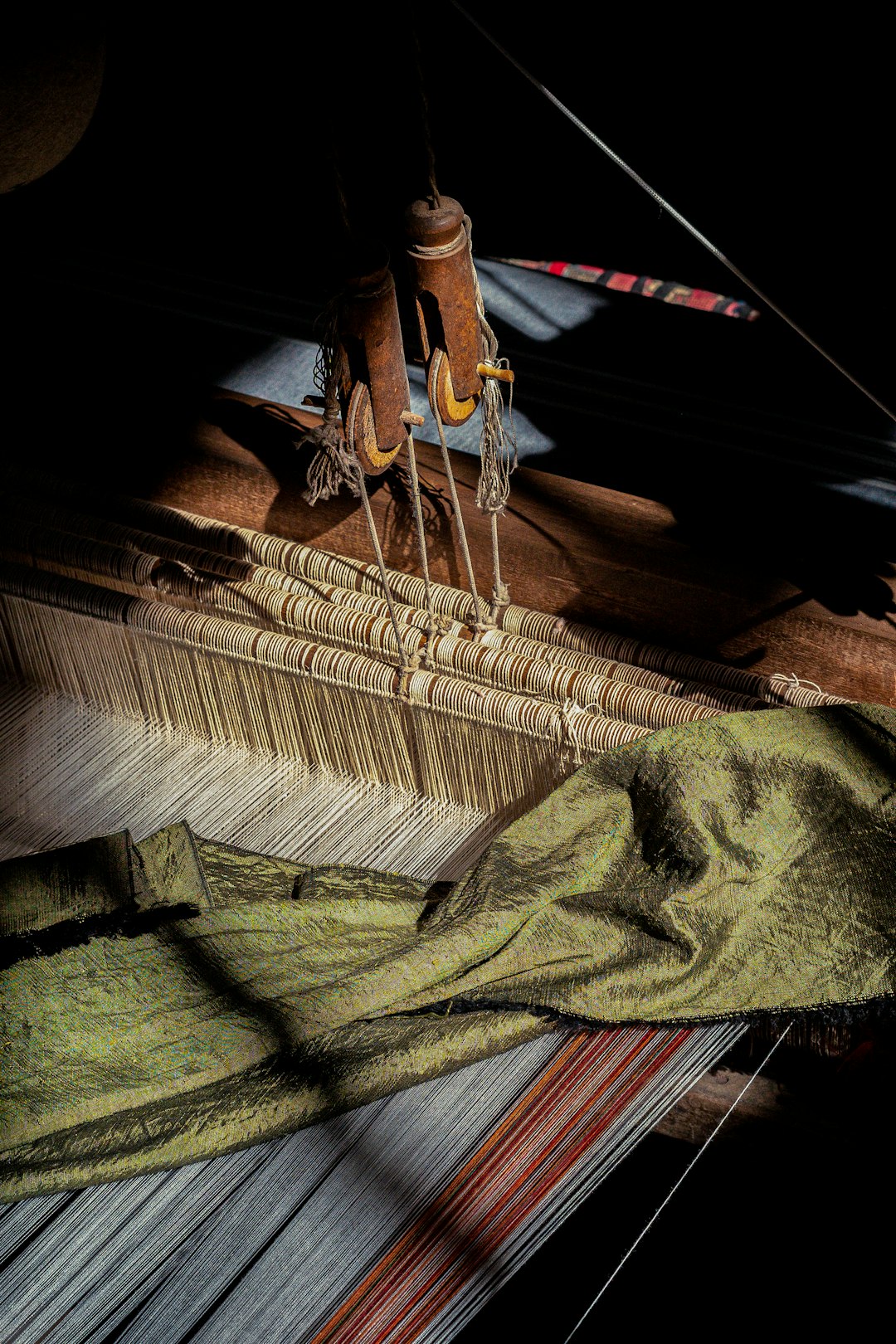
One line, two hands
The painter Mirel Aston on handing a brushstroke to a loom.
Photo by mohammad hassan taheri on Unsplash
Mirel Aston paints in the morning, while the light in her studio is still undecided. Her canvases are mostly one gesture: a wide stroke, pulled once, left alone.
When we asked her to make a rug, she asked a better question. What happens to a gesture when it has to be knotted?
The answer took months. The stroke was drawn again at full size, then broken into rows. Every place where the brush thinned became a choice: which thread, which tone, where the colour lets go.
A brushstroke lasts a second. Here it takes weeks, and it still has to look like a second.
She reviewed the samples one square at a time, and rejected some for being too clean. “The loom wants to be tidy,” she says. “I kept asking it not to be.”
The finished piece, Burnt Current, keeps the drag of the brush: a dark centre, and edges that fade the way paint fades when the brush runs dry.
It is not a copy of a painting. It is the same decision, made again, by other hands.
Stories / No. 02 / Process
Colour, the slow way
How a colour is chosen, matched, and dyed by hand into New Zealand wool.
Every Common Grounds rug starts as a drawing, and every drawing starts without colour.
Colour comes later, and slowly. We lay the drawing beside a book of wool: hundreds of dyed threads, each with a number. A colour is chosen only when it can be pointed at.
Then it is tested. A square of fifteen by fifteen centimetres is made first, and looked at in daylight, in lamplight, on the floor. Most colours change their minds when they meet the floor.
A colour is chosen only when it can be pointed at.
The wool comes from New Zealand: long, bright fibres that take colour evenly and deeply. It is dyed by hand, in small batches, using traditional methods. Lowered into the dye bath, lifted, lowered again, until the colour stops sitting on the wool and becomes it.
No two batches are identical. A blue dyed in spring is not the blue dyed in winter. We used to treat that as a problem. Now we write it down, and keep it.
What reaches your floor is not a colour from a screen. It went through water, heat and hands, and came out slightly different, the way colours do in the world.
Stories / No. 03 / Inspiration
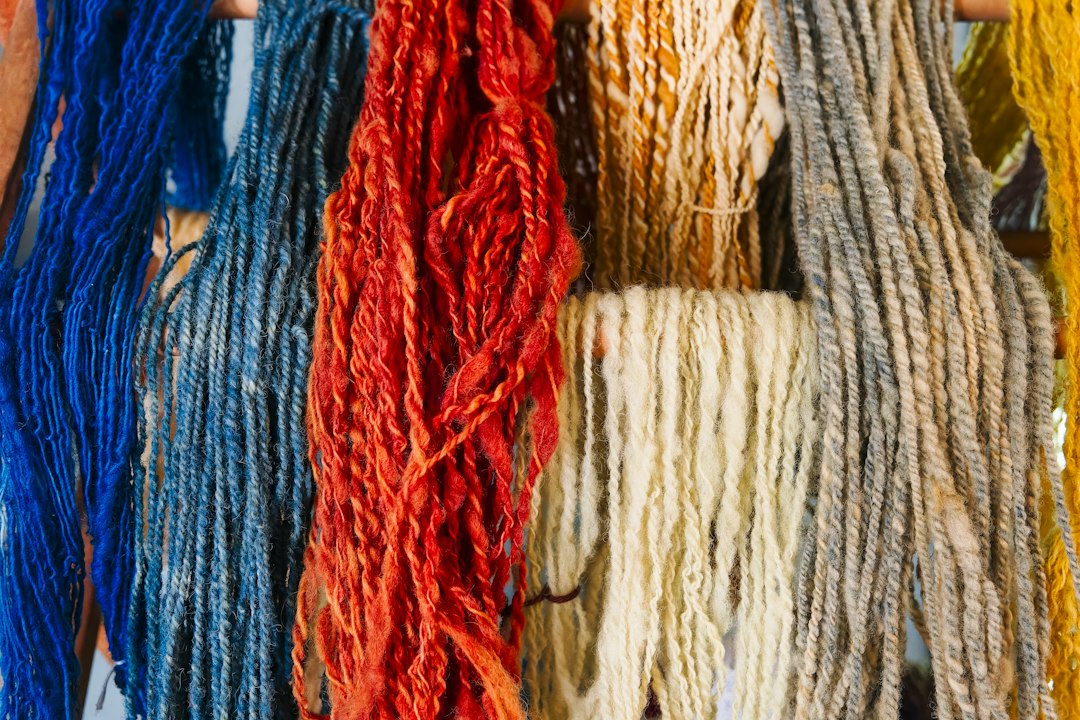
Where the floor begins
Morocco, the Mediterranean, a European grid. The worlds we borrow from.
Photo by Eric Prouzet on Unsplash
Common Grounds borrows from three places at once.
From Morocco, the idea that a rug is not decoration but a surface people live on: slept on, sat on, crossed barefoot.
From the Mediterranean, the light. Colours that hold at noon and at dusk: sand, olive, clay, a blue that goes almost black.
From Europe, the grid. The quiet discipline of modernist architecture and textiles, where a single line can hold a whole room together.
Pattern is a habit. We are interested in where habits come from.
Our line is Ancient Habits. It is less about the past than about repetition: a knot tied the same way for centuries, a grid that returns in every culture that ever built a wall.
The collection moves between those worlds without choosing one. Olive Grid is European in its bones and Mediterranean in its colour. Harbour Frame borrows a border from an old carpet and paints it in fired clay.
None of these rugs is a quotation. They are what happens when different habits share the same floor.